
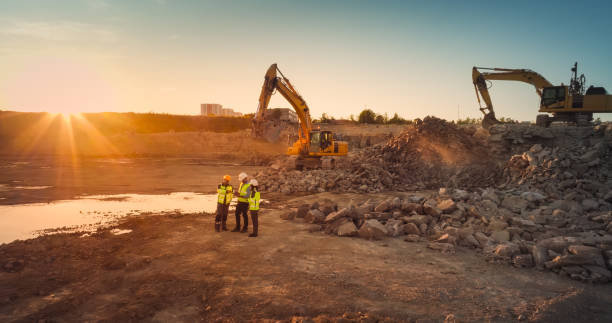
The Potential of Kenya’s Underground Wealth
Kenya’s geological landscape is a treasure trove of diverse and valuable gemstones and minerals, extending far beyond its known deposits of gold. From the brilliant ruby reds found in the Tsavo region to the vibrant green tsavorite garnets of Taita Taveta, and from the ornamental wonders of fluorite and rhodochrosite to the industrial might of graphite and cobalt-bearing minerals, the country possesses significant, underexploited potential. However, this subterranean wealth has traditionally been accessed through artisanal and small-scale mining (ASM) operations, which are often characterized by informal structures, inefficient and environmentally damaging extraction methods, and a severe lack of access to fair markets. This disconnect between potential and realization means that local miners frequently receive a fraction of the true value of their finds, while the Kenyan economy misses out on substantial export revenue and job formalization. The challenge has not been a lack of resources, but rather the absence of a structured, ethical, and technologically adept conduit to bridge the gap between these remote mining communities and the high-value international markets that demand their products.
Peak Mining’s Integrated Approach to Value Addition
Peak Mining positions itself as this essential bridge, operating through an integrated, five-pillar model designed to transform Kenya’s mining sector. The process begins with ethical sourcing and formalization, where the company partners directly with artisanal cooperatives, providing training on safe, productive, and environmentally responsible mining practices that improve yield and minimize ecological impact. The second pillar involves technical facilitation and processing. Peak Mining establishes central processing hubs equipped with advanced technology for washing, sorting, cutting, and grading gemstones, and for crushing, grinding, and beneficiating industrial minerals. This is complemented by the third pillar: rigorous quality assurance. Using tools like X-ray Fluorescence (XRF) analyzers and gemological laboratories, the company provides certified verification of quality, purity, and provenance, which is paramount for commanding premium prices on the global stage.
Market Access and Ethical Certification
The fourth pillar of Peak Mining’s model is market differentiation and access. By adding significant value through processing and certification, our company bypasses traditional exploitative middlemen. It cultivates a trusted client base ranging from international gemstone wholesalers and luxury jewellers seeking ethically sourced gems to industrial manufacturers requiring precisely graded minerals like feldspar, mica, and graphite. For gemstones, this means ensuring traceability from mine to market; for minerals, it involves meeting strict chemical and physical specifications for glass, ceramic, paint, and technology industries. Crucially, this entire chain is underpinned by the fifth pillar: commitment to ethical and sustainable practices. Peak Mining advocates for and adheres to frameworks like the Responsible Mica Initiative (RMI) and Kimberley Process Certification Scheme, ensuring its products are free from child labor, conflict, and environmentally destructive practices, thereby enhancing their appeal to conscientious global buyers.
Driving National Economic and Social Development
Peak Mining has profound implications that extend far beyond individual transactions. By creating a transparent and formal supply chain, our company ensures that a much larger share of the final revenue returns to the local miners and their communities, fostering sustainable economic development and poverty alleviation in rural areas. Furthermore, this model contributes significantly to national goals by increasing Kenya’s export diversification, generating foreign exchange, and creating formal employment opportunities in skilled fields such as geology, processing technology, and quality control. Ultimately, Peak Mining’s facilitation represents a paradigm shift for the sector. It moves Kenyan gemstones and minerals from being informally traded curiosities to becoming globally competitive, high-value commodities, ensuring the nation’s geological wealth finally translates into tangible, equitable, and sustainable prosperity for its people.